Shipwreckin’ in the Baltic
The Baltic Sea is difficult to navigate, through the ages many vessels have been wrecked. Marine archaeologists tell us about discoveries of ships and the difficulties involved in preserving the wrecks on land.

A scholarly journal from the Centre for Baltic and East European Studies (CBEES) Södertörn University, Stockholm.
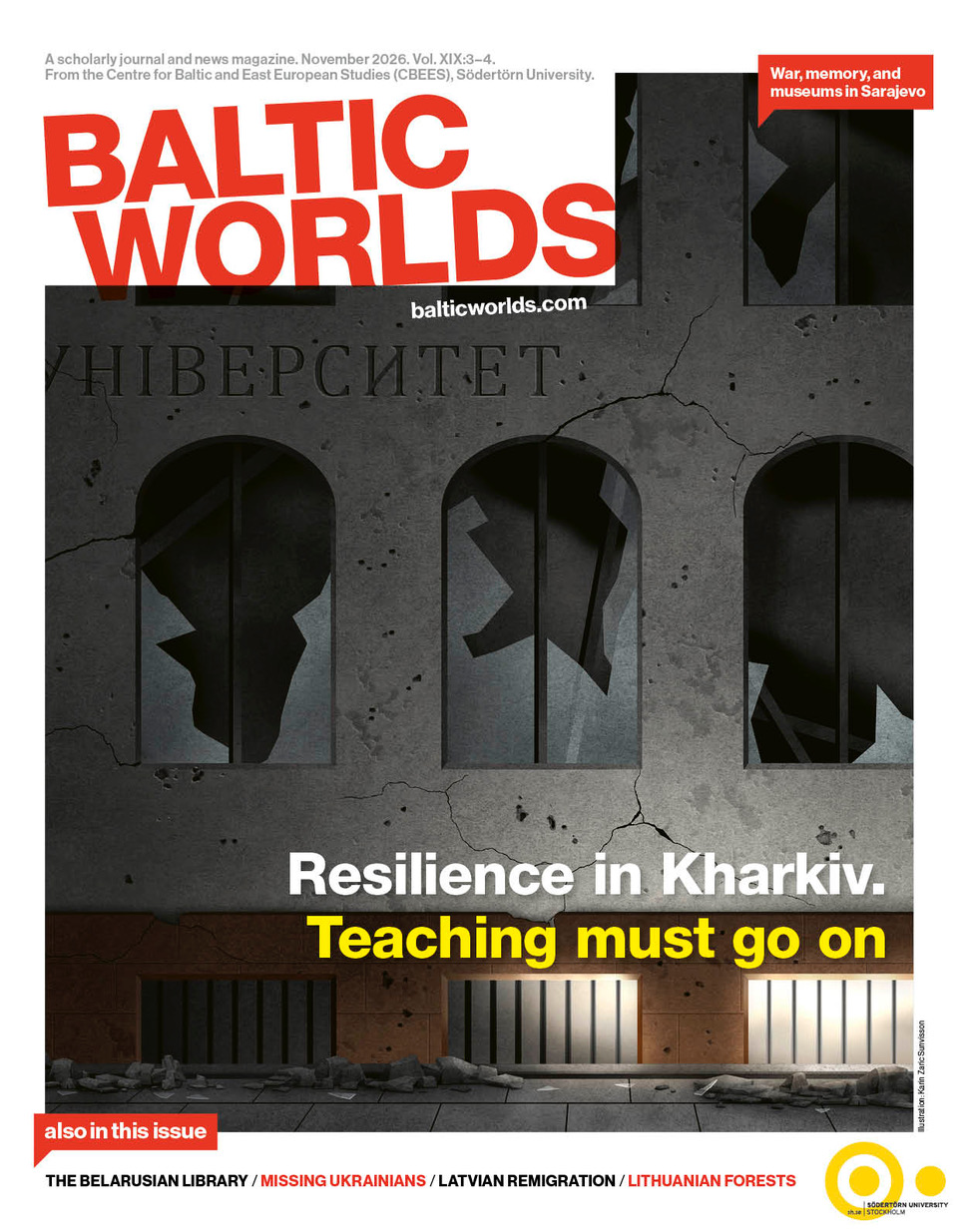 Issue 2026, 3-4: Download.
Features offer in-depth accounts of issues related to the region without prior peer-review process.
The Baltic Sea is difficult to navigate, through the ages many vessels have been wrecked. Marine archaeologists tell us about discoveries of ships and the difficulties involved in preserving the wrecks on land.
European Humanities University, EHU, is a Belarusian university in exile that educates Belarusians in an academic environment that encourages the development of independent views. Students run the risk of arrest and interrogation by the Belarusian police. Some can no longer return to Belarus during school breaks.
In the fall of 2009, Uncivil Society: 1989 and the Implosion of the Communist Establishment by Stephen Kotkin was published. The book offers a new interpretation of the causes behind the Eastern European collapse of 1989, utilizing structural and economic explanations.
Of Lithuania’s 220,000 Jews, 94 percent were killed during the Holocaust. But few in Lithuania want to talk about crimes other than those committed by the Soviets against the Lithuanian minority. Today, slogans such as “Juden Raus” can again be heard on the streets of Vilnius.
The body as a commodity that can be sold, or its parts bought. Organ donation as an altruistic act. Which factors determine the approach to organ trade?
Issue 2026, 3-4: Download OA. Baltic Worlds covers; the Baltic Sea Region, Eastern Europe, Russia, CentralAsia, Caucasus and the Balkan area.