Peer-reviewed articles have all been through a peer-review process. We practice double-blind peer-review. All material is reviewed by two independent specialists at least at post-doc level. A prerequisite for publishing scientific articles in Baltic Worlds is that the article has not already been published in English elsewhere. If an article is simultaneously being considered by another publication, this should be indicated when submitting.
Empirical data presented in this article suggest that foreign direct investments in the meat industry have had important positive spillover effects on the host-country firms in the eastern Baltic Sea region in terms of productivity, delivery performance, quality standards, technology transfer, efficiency, and upgrading of managerial and labor force skills. Other indications of spillover effects have been increases in productivity and innovativeness of local companies through increased competitive pressure and knowledge flows.
By
León Poblete & H. Richard Nakamura
January 24, 2014
In the contemporary globalized economy, local political decisions about how to achieve regional sustainability goals are increasingly dependent on the transnational regulatory framework. As the cases presented in this article illustrate, the ultimate standard against which the sustainability concerns of two Baltic region states are assessed are the laws establishing the Single Market within the EU.
By
Karolina Zurek
January 24, 2014
Fatherhood in Russia today is a vague institution. The role of the father is developing in several directions at the same time, both in state policies and in the private sphere. The lack of coherence is somewhat surprising since active, engaged fatherhood has proven to be an important factor to reverse declining birth rates, which is a key factor behind Russia's current demographic crisis.
By
Johnny Rodin & Pelle Åberg
January 23, 2014
The results of the present study, the first of its kind in Bulgaria, demonstrate the scope of the historical memory of Bulgarian citizens. The work reveals how consolidated and coherent the historical memory of the majority group is, and at the same time how fragmented the memories of the minority groups can be.
By
Evelina Kelbecheva
November 11, 2013
The present article presents the results of a synthesis of the literature on port authority governance models worldwide. Our aim is to make a comparative analysis of existing governance models in four major seaports in the Baltic states — Tallinn, Estonia; Klaipeda, Lithuania; and Riga and Ventspils, Latvia — to identify key challenges and propose possible solutions for sustainable port authority governance.
By
Valters Bolevics, Jan Sjölin & Tatjana Volkova
November 7, 2013
The wish to ethnically classify everything found in the Viking Age trading locations has led archaeologists to neglect the fact that material in those ethnic categories displays not only similarities but also frequent variations, argues the author. She calls for acknowledgment of the differences and variations within those presupposed ethnic categories.
By
Lina Håkansdotter
November 7, 2013
The authors examine neo-Nazis’ increased interest in issues involving the environment and nature, and scrutinize their reasoning about commodification and globalization.
By
Madeleine Hurd & Steffen Werther
October 29, 2013
The diverse mosaic of urban experiences in Prague, Riga, Belgrade, and Tirana is related to major drivers of change in the economic, social, and institutional environment. In mapping an analytical terrain for this comparative study, the “socialist city” is taken as the primary point of departure. One set of influences represents the outcomes associated with the transition to markets, democracy, and decentralized government.
By
Sasha Tsenkova
May 14, 2013
Grass’s Flounder contributes to our work of locating, dislocating, and relocating literature in the Baltic Sea region by challenging us to give attention to the lost or hidden stories that are ignored or played off against each other in the official versions of history that would fix our position in space. While Grass counters the seduction of the big story — universal history — he also reveals himself by getting caught in the contradiction of his own storytelling.
By
Kenneth J. Knoespel
May 14, 2013
In the first post-revolutionary years the Bolshevik government saw Tatar and Bashkir women as important allies. Muslim women from the Volga-Ural region were to be educated and taught about their rights, and this educational campaign was seen as contributing to the development of the new socialist society. Women’s ignorance was seen by the Soviet authorities as an obstacle to progress which had to be overcome with the help of the new institutions like Commissions for the Improvement of the Work and Everyday Life of Women.
By
Yulia Gradskova
January 8, 2013

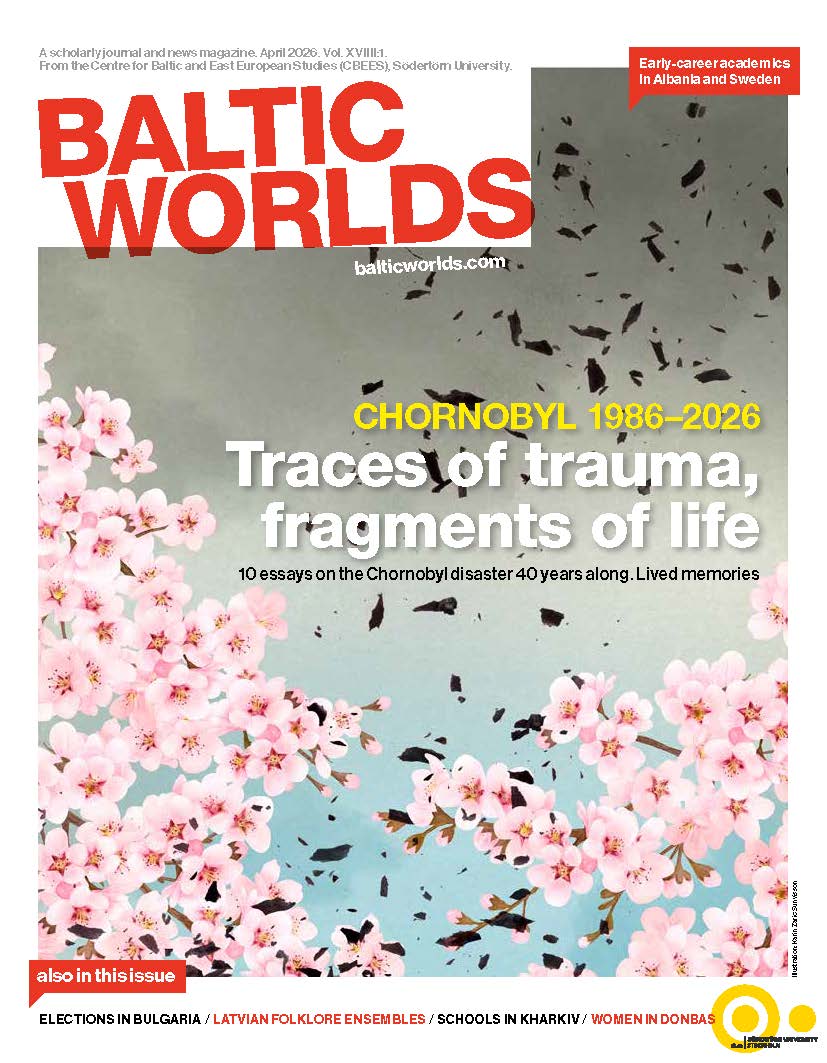 Issue 2026, 1:
 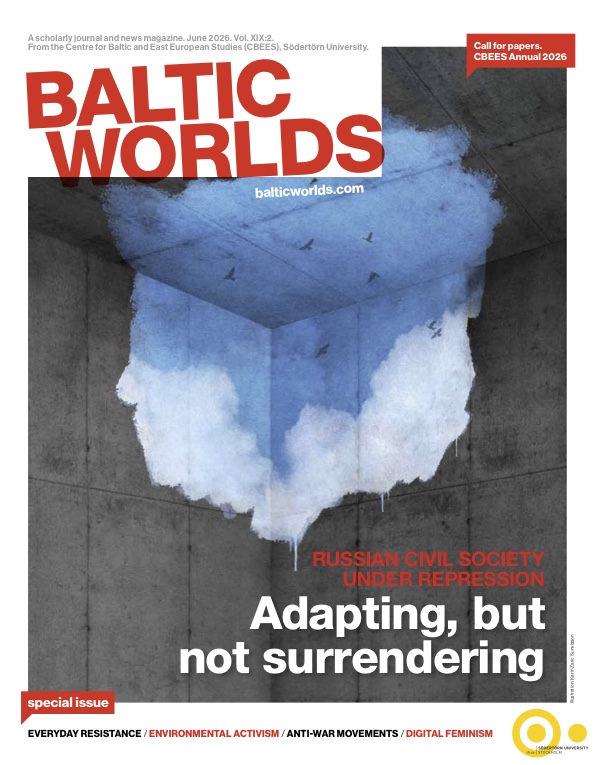 Issue 2026, 2:
  Baltic Worlds covers; the Baltic Sea Region, Eastern Europe, Russia, CentralAsia, Caucasus and the Balkan area.