Peer-reviewed articles have all been through a peer-review process. We practice double-blind peer-review. All material is reviewed by two independent specialists at least at post-doc level. A prerequisite for publishing scientific articles in Baltic Worlds is that the article has not already been published in English elsewhere. If an article is simultaneously being considered by another publication, this should be indicated when submitting.
This article focus on how the Gdańsk shipyard strike and the formation of Solidarity have been remembered and observed afterwards, especially in connection with the 30th anniversary in August 2010. The author explores how people create meaning in past events in relation to current interests, and how the depiction of a shared history is constantly recast and used.
By
Karin S Lindelöf
January 8, 2013
A young geographer by the name of Sten De Geer mapped the cities around the Baltic Sea in an article published in 1912. As an attempt to capture the urban structure of Baltic region cities, his paper is unique. In this article, we comment on his meticulous descriptions of these cities, with a century-long perspective.
By
Thomas Lundén
January 7, 2013
As an EU-member, Lithuania has to a large extent set up institutional mechanisms to combat homophobia. It has implemented anti-discrimination laws that are roughly in line with EU norms. At the same time, the country does not allow same-sex marriage, fails to recognize same-sex partnership (or indeed any form of civil partnership), and does not allow homosexual couples to adopt children. A still greater problem, note the authors, is that the political and cultural climate remains deeply hostile towards homosexuality and towards recognizing the rights of individuals of a minority sexual orientation.
By
Inga Aalia & Kjetil Duvold
June 28, 2012
The crucial matter of creating a Latvian “national” university in the aftermath of World War I may be seen as an example of the way this new nation was structured in both symbolic and practical terms. This academic institution provided an arena for rewriting the nation’s past history and recreating its folklore customs — both essential to Latvian culture.
By
Per Bolin
June 27, 2012
Orphanage No. 7 in Taganrog was one of the former Soviet orphanages that came into contact with the new charity early on, in the form of summer vacation exchanges with Swedish host families. The reality Swedish visitors encountered in Taganrog and elsewhere, however, was not always of the dreaded kind — a destitute shelter for desperate children abandoned by the world — although such a description was at times apt, especially in reference to homes for the mentally disabled. What they found instead were tangible traces and elements of entirely different plans and ambitions.
By
Håkan Blomqvist
June 27, 2012
In this essay there is a discussion whether the recent developments in the Serbian and Croatian legislations on minority rights represent one occasion on which the EU’s informal engagement has exerted a beneficial influence. It is also noted that, throughout the last decade, the roles of Serbia and Croatia as kin states to ethnic Serbs in Croatia and ethnic Croats in Serbia has been constructive.
By
Vassilis Petsinis
April 10, 2012
The history and sociology of the telephone in Russian society have only slowly become the object of serious study. The scope of this essay is limited to the following two topics: first, the forms of use, in pre-revolutionary Russia and the Soviet Union, of the telephone as a means of communication, potentially universally available and “horizontal” but actually restricted by “vertical” forces; and second, the symbolism that accumulated around this means of communication in Russian and Soviet culture.
By
Lars Kleberg
April 10, 2012
Infrastructure forms a link between the open global economic space and the non-public Russian political space. The question of how to manage the most important trade flows and understand their social importance is not, of course, solely seen as a matter of Russian politics. The research on Russia is also connected to the recent debate on the importance of increasing globalization and the mutual dependence of societies.
By
Katri Pynnöniemi
January 16, 2012
The authors here argues that the total picture of the Scandinavian can only be established when the “Rosenholz”-files are generally available. The Rosenholz files consist of three different kinds of records, originally created by the HVA. The major part of the files is 293,000 filing cards of the person index of the HVA. The part of Rosenholz which today is kept in the Stasi files lists 133,000 West Germans, 24,000 West Berliners, 112,000 East Germans, and 121 citizens of other states.
By
Helmut Müller-Enbergs & Thomas Wegener Friis
January 7, 2012
Here the author discuss questions of normality, deviation from norms, and power relations through a selection of Polish student essays that address both gender relationships and the relationship between East and West. The working assumption is that theories of gender and the East— West relation can enrich each other and thus help achieve greater understanding of how both power systems work, individually, and combined.
By
Karin S Lindelöf
January 11, 2011

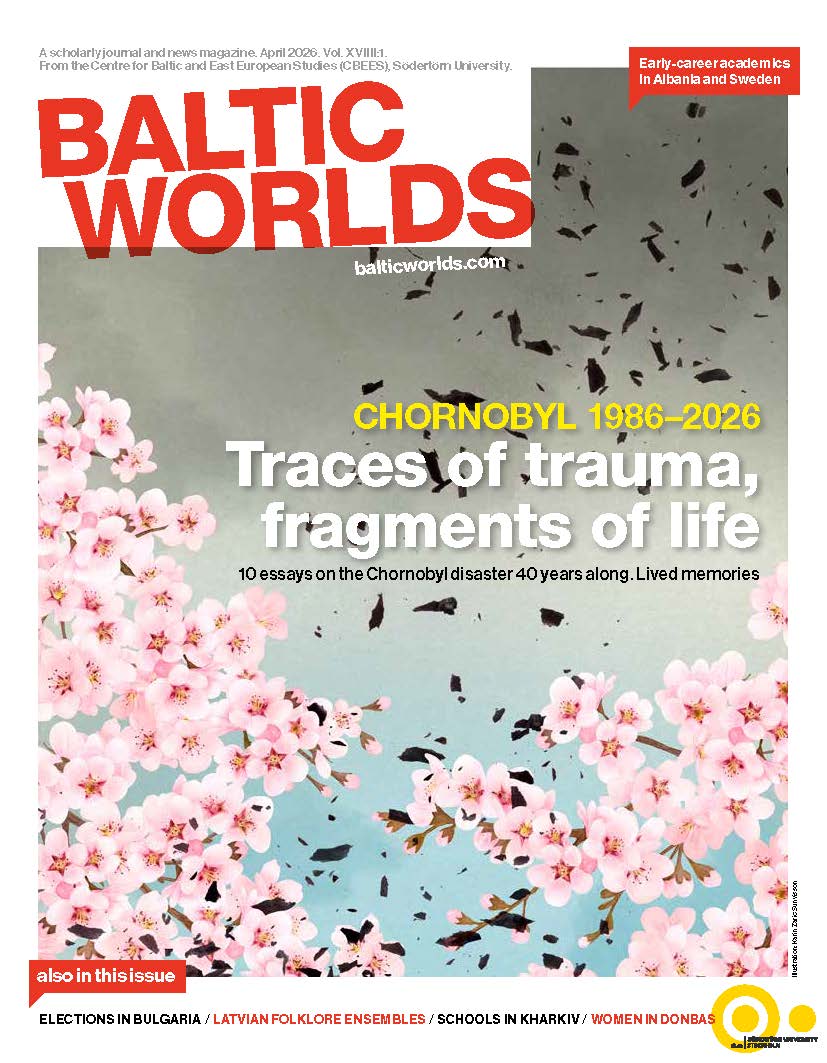 Issue 2026, 1:
 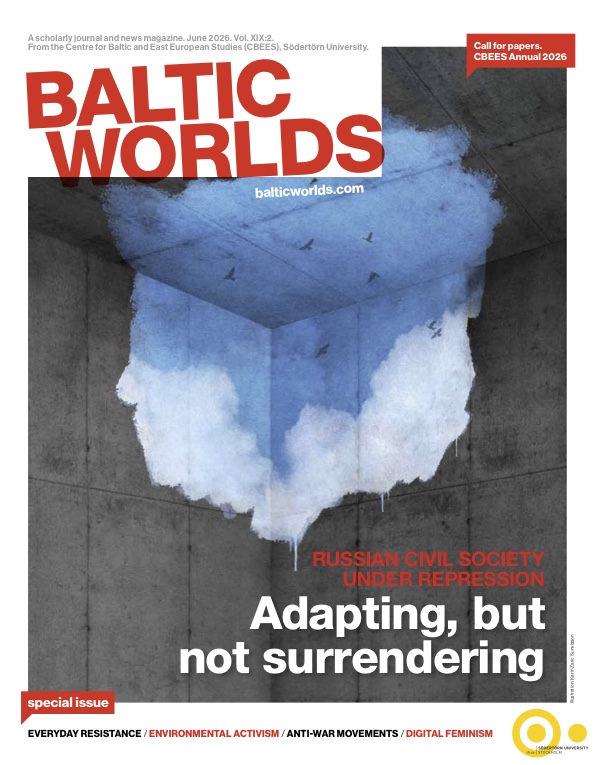 Issue 2026, 2:
  Baltic Worlds covers; the Baltic Sea Region, Eastern Europe, Russia, CentralAsia, Caucasus and the Balkan area.