Lia Dostlieva and Andrii Dostliev
Lia Dostlieva is an Ukrainian artist, essayist, cultural anthropologist and researcher at Adam Mickiewicz University in Poznań, Poland. Focusing on trauma, postmemory, commemorative practices, and agency and visibility of vulnerable groups and how to process “difficult knowledge” and “difficult past”.
Andrii Dostliev is an independent Ukrainian artist, curator, and photography researcher currently based in Poland. His primary areas of interest are memory, trauma, identity – both personal and collective, and various aspects of queerness. Works in various media.
view all contributors
Articles by Lia Dostlieva and Andrii Dostliev
-
Russia’s aggression against Ukraine has contributed to a sense of uncertain sovereignty (Klumbytė 2019, 2022) in Eastern Europe, manifesting in accelerated militarization. This essay invites a more nuanced debate around militarization and borderland futures. Following a series of protests against the construction of a military training ground (poligonas) in Kapčiamiestis, Southern Lithuania, we suggest that the forest disrupts the technē (Scott 1998) of militarization by creating glitches in its practice, the abstracted logic of territorial legibility and calculation. The forest has become a site from which unexpected alliances between local residents, environmentalists, and neighboring Polish communities have begun to articulate alternative understandings of life, temporality, and security, resisting the reduction of the forest to strategic military terrain.
-
Life in Spite of Everything: Tales from the Ukrainian East, Victoria Donovan (London: Daunt Books, 2025), 273 pages.
-
The Baltic Sea Day (BSD) is an initiative launched by Finnish John Nurminen Foundation in 2019. On the last Thursday of every August since, the foundation has celebrated Baltic Sea Day to safeguard the sea environment and to foster an understanding of the sea’s history.
-
This dissertation explores how the economic decline of fossil and nuclear industries is resisted through new ways of representing them as necessary. It argues that energy policy is dominated by experts and elites, and studies the discourse within these circles. Using poststructural policy analysis, the thesis studies three cases in three articles through an empirical material of 56 elite interviews and 91 policy documents. The cases consist of political decisions to manage the decline of peat in Finland, oil shale in Estonia, and nuclear power in Sweden. The cases are compared in this book. The thesis contributes to scholarship on energy security, energy transitions, and neoliberalism, and argues for an increased dialogue between these literatures.
-
This dissertation examines the architectural renewal of Moscow during the 2010s as the dream of the world’s political, economic, technological, and aesthetic progress after the end of the Cold War. The study places particular emphasis on the role that digitalization and digital technologies have played in Moscow’s renewal, as well as on the actors within the sphere of global architecture who have contributed to sustaining this dream by participating in the creation of what was envisioned as a more beautiful, smarter, and more comfortable Moscow.
-
The Russian parliamentary and regional elections of September 2026 took place amid tightening state control over the electoral process and severe restrictions on dissent. This essay examines how anti-war civil society and opposition politicians responded through diverse strategies, from “smart voting” to boycotts and symbolic protests. In particular, it considers the role of independent media in helping voters make more informed choices. Although these initiatives do not signal the emergence of a broader political force capable of challenging the regime in the long term, they point to the persistence of limited forms of political agency within a narrowing political space.
-
Martin Kragh died on 23 July 2026, at the age of 45. His death is a profound loss to Swedish scholarship on Russia and Eastern Europe, and to all those who valued his ability to make history and international affairs understandable, relevant and deeply human.
-
The international conference Past Legacies, Present Tensions, Future Visions: Anthropology and Ethnology in and of the Baltic Sea Region, held at Södertörn University from March 30 to April 1, 2026, brought together around thirty scholars—from doctoral researchers to senior academics—to reflect on the shifting political, social, and epistemic landscapes of the Baltic Sea region.
-
This special issue contributes to the ongoing analysis of the transformations Russian society has undergone since the start of Russia’s full-scale invasion of Ukraine. Tthe contributions examine acts of resistance within professional communities, as well as specific identity-based and issue-based forms of activism, including decolonial, feminist, climate, and environmental initiatives. The issue seeks to offer a bird’s introduction eye perspective on the transformation of activist initiatives over the past four years.
-
This article examines the transformation of civic engagement in Russia after the start of the full-scale invasion of Ukraine in 2022. Drawing on more than a hundred interviews with civic and political activists across several Russian regions, the article traces how anti-war and oppositional initiatives transformed under conditions of escalating repression. Using a micro-sociological approach, the article foregrounds emotions and strategic dilemmas as key (dis)enables of civic engagement alongside with the political opportunity structures. It argues that Russian civil society has not collapsed, but has moved through several stages of the initial moral shock and immediate mobilization, towards fragmentation and cautious re-mobilization. By 2026 civic engagement persists primarily through informal and low-visibility forms, using strategic depolitization as a tactic to survive.
-

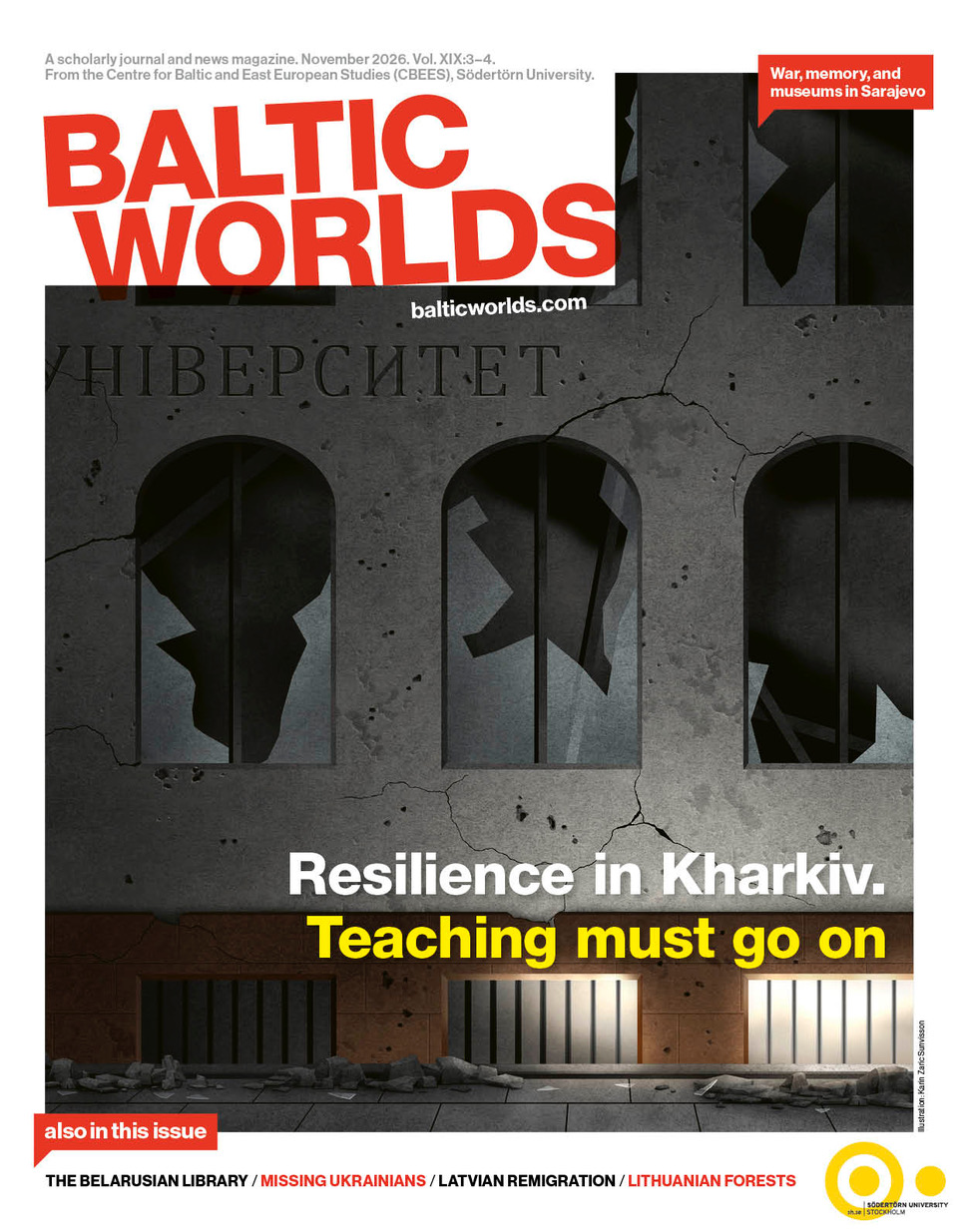 Issue 2026, 3-4: