The authors argue that the current situation of neoliberal capitalism, nationalism, anti-feminism, and racism poses similar (but not identical) threats in different parts of the world, which in turn structures parallel but locally performed resistance. Efforts to create feminist unity in the name of gender studies across different sets of borders also inevitably unveils the cracks and differences dividing feminist communities.
By
Katarina Giritli-Nygren and Angelika Sjöstedt Landén
May 26, 2020
De Baets and his Network of Concerned Historians do an admirable job of raising awareness of the risks that professional historians face, and the political misuse of history. As the annual reports reveal, these dangers to academics are increasing and spreading in lockstep with the growth of authoritarian and populist politics.
By
David Gaunt
December 30, 2019
Ayse Gul Altinay statements at the court is here published. She signed the "We will not be party of this Crime"-petition in Turkey .
By
Ayşe Gül Altınay
June 2, 2019
On the 6th of May this year, Baltic Worlds arranged a seminar at CBEES on the topic of the shrinking space for academic freedom. Updated reports from Poland and Hungary was followed by a presentation of the autocratic learning process in Eurasia. Finally there were suggestions on how protect academic freedom and work for international scholarly solidarity.
By
Ninna Mörner
May 9, 2019
In my contribution I would like to provide an assessment of what has happened over the past two years in Hungary, how academics have been reacting, and finish with a few thoughts regarding academia in that country and beyond. My focus should and will be on the Hungarian Academy of Sciences.
By
Péter Balogh
May 8, 2019
The academic community is international, and this solidarity crosses borders. Angelika Sjöstedt-Landén is one of the founders of the network FEMACT, that aim to fight the limiting space for academic freedom. We asked her to explain more about the initiative.
By
Ninna Mörner
March 6, 2019
The Constitution for Science aims to flatten the structure of Polish science. This can result in easier management, both in economic as well as in political terms, but what is actually at stake is a restriction of academic freedom.
By
Agnieszka Halemba and Magdalena Radkowska-Walkowicz
March 6, 2019
Democratic backsliding has been an abiding and pervasive concern across the post-communist region for almost a decade. Data from the Varieties of Democracy (V-Dem) dataset corroborate this phenomenon and show that one of the contributors to this decline is a narrowing of freedom for academic and cultural expression.While not being the sole driver of this recent backsliding trend, the opportunity for open academic and cultural exchange does remain an important principle of basic electoral democracy.
By
Vello Pettai
March 6, 2019
Student protest as a form of mobilization from below, excluding categorically political organizations like opposition parties and NGOs, has changed the perception in Albanian society about protesting and decision-making. Public opinion regarding the protest in December of 2018 has had the same value as the student movement in 1990—1991 when the system changed, and Albania became a democratic country, and the students are once again bringing hope to Albania!
By
Gilda Hoxha
March 6, 2019
Inaugurated in October 2012, the statue was one of the first publicly-funded right-wing monuments to adorn a public square in postwar Hungary, and only one example of the current Hungarian government’s determined campaign to reformulate public discourse and memory politics.
By
Caroline Mezger
March 6, 2019

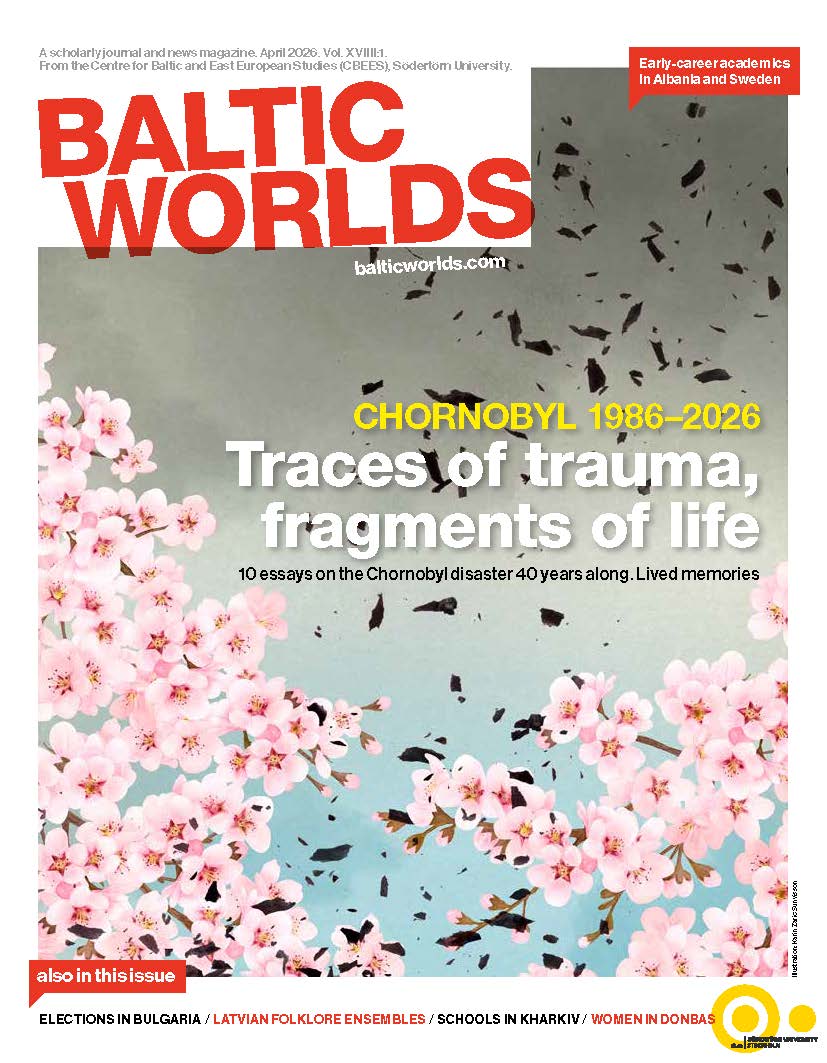 Issue 2026, 1:
 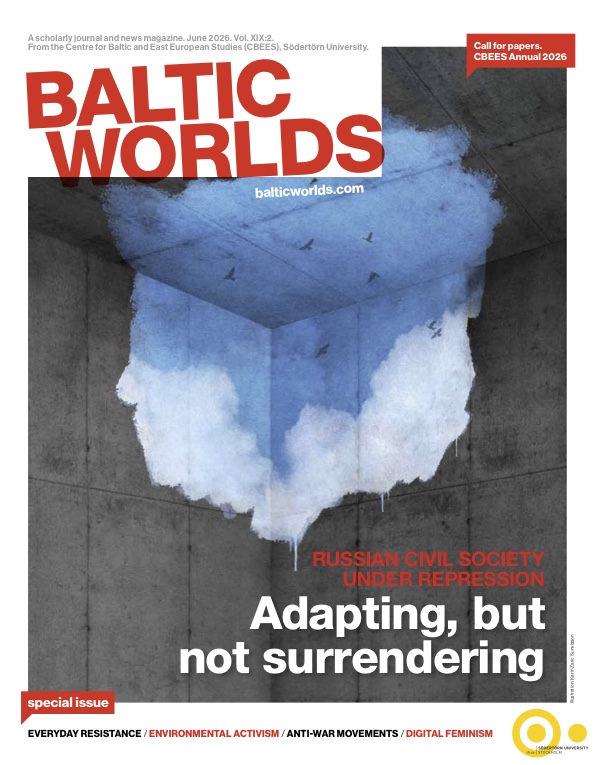 Issue 2026, 2:
  Baltic Worlds covers; the Baltic Sea Region, Eastern Europe, Russia, CentralAsia, Caucasus and the Balkan area.