The authors here argues that the total picture of the Scandinavian can only be established when the “Rosenholz”-files are generally available. The Rosenholz files consist of three different kinds of records, originally created by the HVA. The major part of the files is 293,000 filing cards of the person index of the HVA. The part of Rosenholz which today is kept in the Stasi files lists 133,000 West Germans, 24,000 West Berliners, 112,000 East Germans, and 121 citizens of other states.
By
Helmut Müller-Enbergs & Thomas Wegener Friis
January 7, 2012
The author argues that, despite the disastrous effects of the enormous brain drain for Russia’s development, the emergence of Russian communities abroad can also be seen as an indicator of a normalization resulting from the opening up of the country after a long period of isolation. For Berlin, it is the regeneration of the mixed and more cosmopolitan society of the pre-Nazi and prewar epoch.
By
Karl Schlögel
September 22, 2011
The new virtual Gulag museum in Paris appears in many languages and transcends national boundaries.
By
Florence Fröhlig
June 30, 2011
János Kornai certainly has been taking risks, and he definitely got his chance to develop in a most unusual way. He started out as a very young journalist in communist Hungary, and he eventually became a professor at Harvard.
By
Björn Kumm
June 30, 2011
ICCEES’ (International Council for Central and Eastern European Studies) Eight World Congress “Eurasia: Prospects for Wider Communication” took place in Stockholm, Sweden in July 2010. Host was the Swedish Society for the Study of Russia, Central and Eastern Europe and Central Asia (Sällskapet ). Here you may read Mikhail Gorbachev´s speech, presented at the Opening Ceremony by Pavel Palazhchenko, advisor and interpreter to Mikhail Gorbachev. Also available is an essay based on Professor Archie Browns key note lecture “Gorbachev and Perestroika: a 25th Anniversary Perspective”. The Opening Ceremony and a discussion between Archie Brown, Jack Matlock, author and US ambassador in Moscow 1987‐1991 and Pavel Palazhchenko is published as video films here.
By
Ninna Mörner
August 25, 2010
Gorbachev here emphasize that the essence of glasnost was a real dialogue between authorities and society. The dialogue, he argues here, required a rejection of all forms of censorship and pressure on the mass media, the existence of rights for freedom of assembly, meetings and demonstrations, freedom of conscience, and the creation of public organisations. All this was done in the perestroika years according to Gorbachev.
By
Mikhail Gorbachev
August 25, 2010
Professor Archie Brown argues that Gorbachev was not selected as General Secretary because he was a reformer. He did at the time he became party leader believe both that the system was reformable and that it must be reformed. But he did not, however, reveal the full extent of his existing reformism on the eve of perestroika.
Essay by
Archie Brown
August 25, 2010
The development of a system for producing Russian fashion clothing, along with the discussion surrounding this venture into fashion, is described here. The GUM department store established a studio and hired designers. The quality and wealth of ideas was often poor, but demand grew steadily.
Essay by
Sergey Zhuravlev & Jukka Gronow
July 1, 2010
A close reading of Zinoviev and his view of the dissolution of the Soviet Union as a tragedy. Zinoviev helps us to understand how it feels to have your world dismantled and how that experience forms many of the attitudes that lie behind Putin’s policies.
Essay by
Philip Hanson
July 1, 2010
In this interview professor Birgitta Almgren discusses her study on Nazi-German infiltration in Sweden and the offshoots, in Cold War Sweden, of the GDR’s policies. She is now requesting that the Swedish law courts make it possible for her to continue her research by granting her access to the so-called Rosenholz files.
In a comment professor Åmark argues for a release of the Stasi-material.
By
Hans Wolf
March 24, 2010

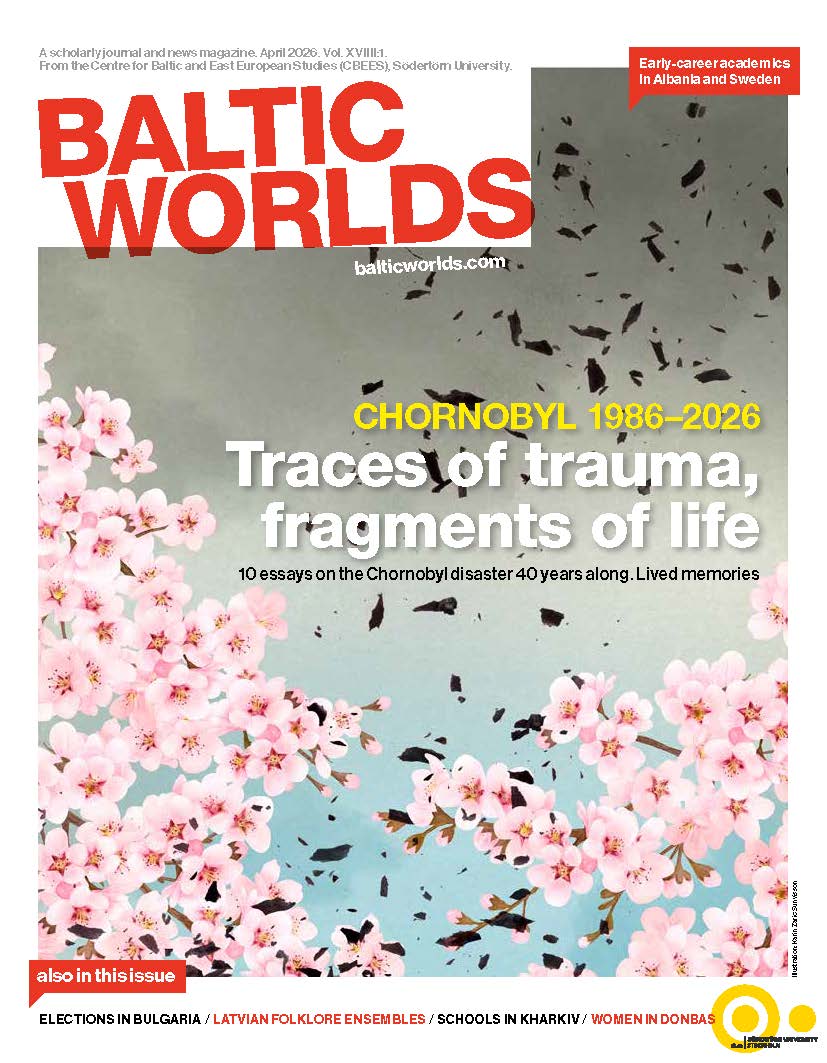 Issue 2026, 1:
 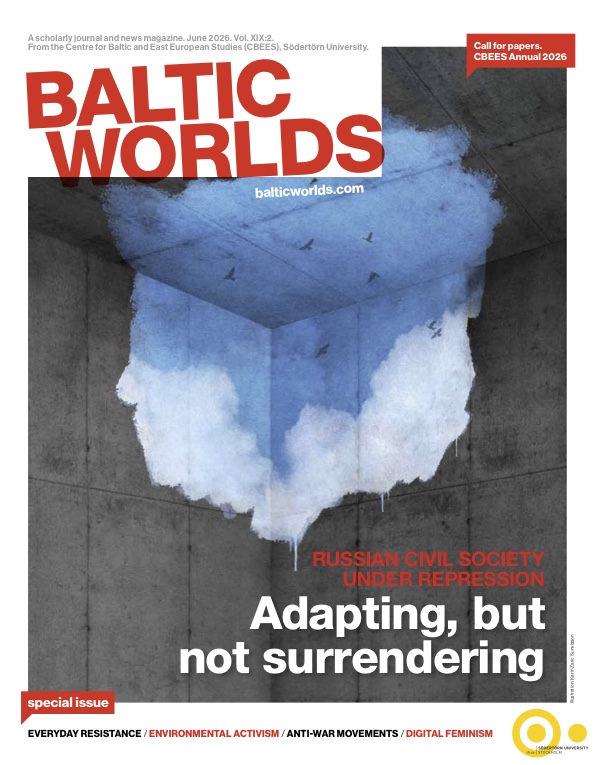 Issue 2026, 2:
  Baltic Worlds covers; the Baltic Sea Region, Eastern Europe, Russia, CentralAsia, Caucasus and the Balkan area.