13 articles tagged with albania were found.
Early-career academics (ECAs) generally experience insecure employment conditions, intense competition for research funding, and limited access to effective mentorship. Postdoctoral career pathways are marked by uncertainty and precarity, with short-term contracts and high expectations for research output, teaching, and administrative work. Drawing on interviews with ECAs in Sweden and Albania, this essay identifies a striking convergence in their experiences despite substantial differences in national academic systems. The findings suggest that these difficulties are not merely country-specific but reflect broader structural characteristics of contemporary European academia. The persistence of such conditions highlights a systemic disconnect between doctoral training and sustainable academic careers, pointing to the need for reforms that promote long-term career stability and healthier research environments. The essay also reveals differences between Albanian and Swedish ECAs’ career aspirations and experiences of gender equality.
Essay by
Gilda Hoxha and Joakim Ekman
April 23, 2026
In 2015, the Albanian government enacted a higher education reform accompanied by intense public disputes. This article employs the concept of hegemony to question: What political articulation became hegemonic in Albania’s higher education policy between 2010 and 2015, and what elements constituted such an articulation? It argues that the government’s articulation became hegemonic through its claim of establishing a regulated higher education market where all participants would compete as equals, thereby addressing all the challenges facing the sector that arose from the chaotic and tumultuous governance of the political opponent.
By
Pavjo Gjini
April 16, 2025
We can all agree that this pandemic is hard to manage and that the saving citizens’ life is the most important issue to deal with initially, but let us reflect on the consequences of the responses. The pandemic experience and the lockdown in Albania, among other perspectives, can be analysed by answering two main questions: 1. What is the socio-economic cost of the lockdown for almost 3 months? 2. What are the implications for the democratic system, is the freedom challenged?
By
Gilda Hoxha
May 18, 2020
Tourist in Utopia. Travels in Ideology and the Albanian landscape [Turist i Utopia, reiser i ideologi og albansk landskap], Rune Ottosen (1950-). 336 pages.
By
Francesco Zavatti
June 19, 2019
Student protest as a form of mobilization from below, excluding categorically political organizations like opposition parties and NGOs, has changed the perception in Albanian society about protesting and decision-making. Public opinion regarding the protest in December of 2018 has had the same value as the student movement in 1990—1991 when the system changed, and Albania became a democratic country, and the students are once again bringing hope to Albania!
By
Gilda Hoxha
March 6, 2019
In the analysis of how self-organized groups work, act, and cooperate in young democracies like Albania, it is shown that different financial, human, technical, and political factors determine to what degree the self-organized groups are dependent on the political opportunity system in order to achieve their goals.
By
Gilda Hoxha
June 18, 2018
The elections in Albania were overshadowed by three issues: further EU integration through key judicial reform, and property rights. All three are closely interconnected, and illustrate the difficult changes Albania still need to face in order to become a politically, economically and judicially stable country.
By
Jessica Giandomenico
November 8, 2017
The 23 June 2013 parliamentary elections were an important test for Albanian democracy. Albanian elections have always fallen short of […]
By
Arba Murati
July 15, 2013
The diverse mosaic of urban experiences in Prague, Riga, Belgrade, and Tirana is related to major drivers of change in the economic, social, and institutional environment. In mapping an analytical terrain for this comparative study, the “socialist city” is taken as the primary point of departure. One set of influences represents the outcomes associated with the transition to markets, democracy, and decentralized government.
By
Sasha Tsenkova
May 14, 2013
In Albania, its cultural heritage is threatened by tourism. Fairytale castle are being converted to hotels with no respect for their history. Albanians politicians believe that they cannot afford to preserve the past for the future, says reporter Axel Kronblom.
By
Axel Kronholm
May 13, 2013

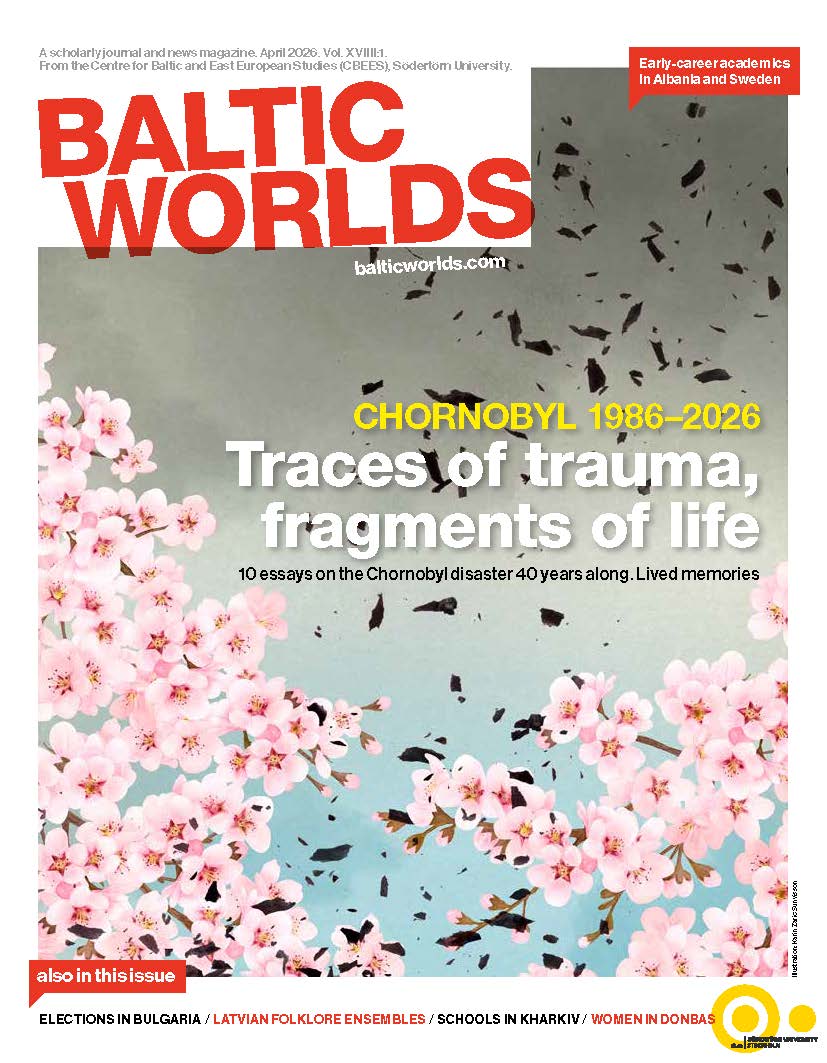 Issue 2026, 1:
 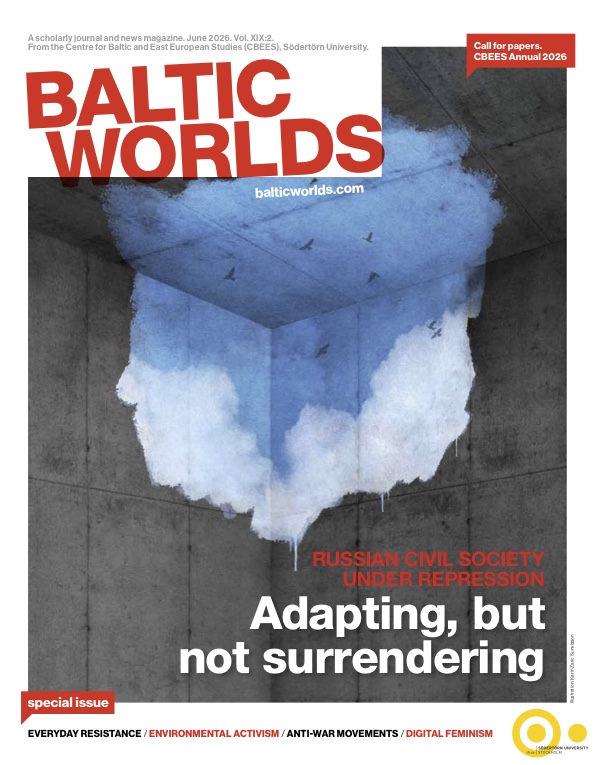 Issue 2026, 2:
  Baltic Worlds covers; the Baltic Sea Region, Eastern Europe, Russia, CentralAsia, Caucasus and the Balkan area.