contributors

Karin Grelz

Researcher at the Institution for Slavic Languages at Stockholm University. Research interests: the Russian poet Marina Tsvetajeva and Lidija Ginzburg.

view all contributors

Articles by Karin Grelz

  1. The silence of the Belarusian library A struggle against disappearance

    This essay examines the escalation of book censorship and repressions against independent publishers in Belarus. While state registries mask the suppression as a minor statistical anomaly affecting a minimal percentage of the national bibliography, context reveals a centralized program of cultural erasure (and books published in Belarusian language, in particular). The regime targets the intellectual vanguard, liquidating independent publishing houses and criminalizing Belarusian-language materials to suppress civic dissent. Situated within a broader historical trajectory – from Imperial Russian and Stalinist repressions to contemporary practices – the domestic crackdown has forced an institutional exodus, shifting the center of Belarusian literature abroad. This study analyzes the resilience of the transnational publishing infrastructure operating in exile and calls for the global community's support in counteracting state-enforced amnesia.

  2. The Sarajevo museums and preserving the memory of the Bosnian War and war crimes

    Museums in Sarajevo (BiH) serve as sites for preserving and re-examining the memory of the war and war crimes of the 1990s. Engagement with memory takes place across both micro- and macro-contexts, which helps to flesh out individual narratives, highlight the specific characteristics of events, and underscore traumatic aspects. In this capacity, these museums have evolved into educational and research hubs dedicated to addressing the memory of the war and attempting to overcome societal trauma. A drawback, however, is the focus on a single perspective – the Bosniak one – to the exclusion of the Bosnian Serb and Bosnian Croat perspectives on the war and the associated war crimes.

  3. Baltic and Nordic perspectives on cultural policies and marketization of arts

    This article examines how cultural policy initiatives in two Nordic and two Baltic countries have addressed the idea of cultural and creative industries and artistic autonomy in relation to artists’ work. Drawing on a thematic analysis of national cultural policy documents in Finland, Sweden, Estonia and Lithuania, the study explores the long durée of cultural policy shifts from a welfare perspective safeguarding artistic work from political and commercial influences toward increasingly market-oriented and entrepreneurial approaches. Despite differing historical trajectories, the Nordic and Baltic countries exhibit similar patterns in integrating arts and culture into the cultural and creative industries sector and adopting a market logic for artistic work. The document analysis reveals a more turbulent transition towards viewing artists as entrepreneurial market actors in the Baltic states, whereas the Nordic countries have incorporated these ideas more incrementally, partially because of the earlier adoption of neoliberal principles. In all countries the political goal of merging cultural and economic policies was transformative of the artistic sector, provoking both resistance and pragmatic approaches from the stakeholders.

  4. The voices of missing Ukrainians in Russian captivity

    Ukrainian authorities estimate that at least 16,000 civilians have been abducted and are currently being unlawfully detained by Russia. Russia refuses to disclose the whereabouts of those it holds in captivity, with the obvious intention of placing these “disappeared” people outside the protection of the law. This is argued by the Kharkiv Human Rights Protection Group (KHPG), a Ukrainian human rights organization that, among other things, tries to locate missing Ukrainians, documents disappearances, supports families, and collects evidence that can be used in future legal processes.

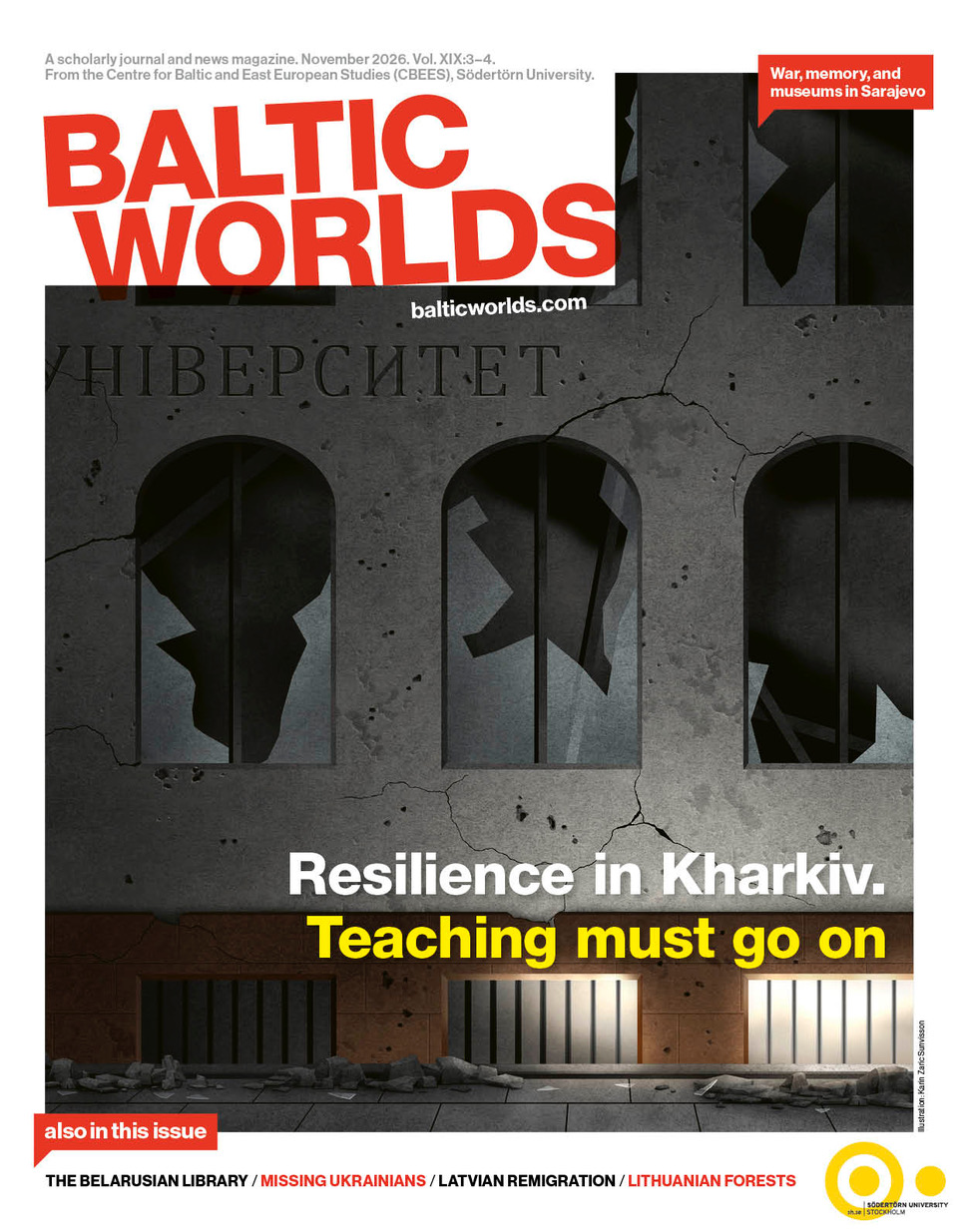
  5. Introduction. Theme: Recovery and resilience in Kharkiv From underground learning to national recovery THE TRANSFORMATION OF UKRAINIAN UNIVERSITIES IN WARTIME

    These three essays and the reports are unified by their rigorous examination of institutional and human resilience within Ukraine’s educational, social, and psychological infrastructure during the full-scale Russian invasion. Overall, the papers analyze how systemic military aggression necessitates a radical shift in pedagogical, sporting, and ethical paradigms. From “underground” teaching and learning at universities to the survival of youth athletic pipelines and the emotional endurance of faculty, these works highlight the intersection of emergency adaptation and national identity. For journal readers, this collection offers a rare empirical window into sectoral survival under existential threat, providing a blueprint for maintaining educational, intellectual, and physical sovereignty amidst the war in Ukraine.

  6. Education as resistance WARTIME UNIVERSITY PRACTICES AND DECOLONIZATION IN UKRAINE

    The full-scale Russian invasion of Ukraine has generated unprecedented threats to the nation’s educational system, compelling universities to develop innovative survival strategies against imperial aggression. Using Yaroslav Mudryi National Law University as a case study, this article examines how higher education functions as a decolonizing force during armed conflict. Drawing on document analysis, visual documentation, and thematic analysis, the study explores how wartime adaptations, such as transforming deep bomb shelters into classrooms and student housing, preserve the right to education and reinforce Ukraine’s intellectual sovereignty. Student choice data reveal an empowered learning community navigating blended and distance learning according to safety needs. Ultimately, these subterranean and digital adaptations transcend pragmatic necessity; they constitute acts of epistemic resistance that safeguard cultural identity, institutional autonomy, and the nation’s right to produce its own knowledge. The “underground university” thus emerges as a practical manifestation of education’s decolonizing power during war.

  7. The transformation of youth sport education in Ukraine under war. Perspectives on recovery

    This study systematizes the transformative impacts of the full-scale military invasion on Ukraine’s youth sport education systems and substantiates multilevel recovery strategies within the Long-Term Athlete Development (LTAD) framework. The analysis focuses on how macrosystemic disruptions affect the pedagogical continuity and developmental pathways of young learners. A qualitative analytical approach was employed and Bronfenbrenner’s ecological systems theory provides the theoretical lens. The findings reveal a critical disintegration of the “talent pipeline” due to the destruction of educational infrastructure, the forced migration of the pedagogical core (coaching staff), and the militarization of sports-based learning in occupied territories. The results extend LTAD theory by demonstrating its structural vulnerability under prolonged crises and identifying primary pathways of institutional and educational erosion. Recovery requires a transition from emergency management to a resilient educational model that integrates psychosocial support into athletic training.

  8. University staff’s mental health in wartime Personal experiences, emotional well-being, and support mechanisms

    This study empirically examines the psycho-emotional well-being and burnout-related symptoms of 94 academic staff from Kharkiv, Sumy, and Dnipro. Data collected via adaptive self-report instruments were analyzed using Spearman’s rank correlation. Results indicate substantial emotional strain, with 79.8% of respondents reporting moderate-to-high emotional exhaustion. The correlation analysis showed that respondents with direct personal connections to the war, such as relatives in the Armed Forces, were significantly more stressed and emotionally exhausted. Interestingly, despite high emotional exhaustion, negative affective reactions remained low, reflecting how collective professional identity and civil obligation as non-material resources mitigate cynicism and counteract the traditional Maslach Burnout Inventory model. Furthermore, functional impairment correlated powerfully with internal emotional exhaustion rather than external infrastructural disruptions. Consequently, support strategies must address individual trauma loads, reinforcing mission and purpose as key non-material resources to reduce long-term professional attrition.

  9. PERFORMING EDUCATION AGAINST ALL ODDS Experiences from H. S. Skovoroda Kharkiv National Pedagogical University

    There are many difficulties and challenges for higher education in war zones. Rector Yurii Boichuk and Vice- Rector Volodymyr Borysov, at H. S. Skovoroda Kharkiv National Pedagogical University in Kharkiv, have personal experience of providing education against all odds. They describe how they have been organizing the educational programs at their university; Yurii Boichuk presents the work with strengthening the education for Children with Special Needs (SEN) and Volodymyr Borysov describes the importance of providing both online and offline education in times of war.

  10. Diasporic heritage and remigration IDENTITY, MEMORY, AND RETURN AMONG SECOND-GENERATION LATVIAN EXILES

    This article examines the remigration of second-generation Latvian exiles who relocated from the United Kingdom to Latvia in the 1990s after the restoration of independence. Drawing on life-story interviews, the study approaches return not as a purely demographic or economic phenomenon, but as a biographical and identity-shaping process. It analyzes how Latvian identity maintained within exile families, participation in diaspora youth organizations, political socialization, and accumulated professional capital shaped both the decision to return and subsequent settlement trajectories. The findings suggest that remigration emerged through a multidimensional constellation of factors: structural opportunities in post-socialist Latvia, language competence and Western-acquired skills, family considerations, and a consciously articulated wish to “be Latvian in Latvia.” At the same time, return involved negotiating tensions between an ideologically constructed homeland and post- Soviet realities. The study highlights remigration as the transformation of inherited belonging into lived social participation.

Looking for someone? Enter a contributor's name and we will have a look!

Here you can read about the people who have been involved in Baltic Worlds. The texts and images have been provided by the individuals themselves.

If you have contributed to Baltic Worlds and would like to update your presentation, or if you want to send a message to one of our collaborators, send an email to bw.editor@sh.se.