As Poland lifts restrictions and comes out of the lockdown ensued by COVID-19, much has been said on what the pandemic has revealed about our economy, public institutions, gender relations, and state of democratic checks and balances. What has been less discussed, yet not gone unnoticed, is the way this security crisis has revealed ongoing processes of societal militarization, and the shift of society-military relations towards closer ties and interactions. Just like the war in Ukraine and the Refugee Crisis, Covid-19 has further normalized bringing the Polish society into defense through militarized channels. However, a closer look reveals the potential for shifting this process into more civilian-based forms.
By
Weronika Grzebalska
May 31, 2020
The Covid-19 pandemic created the need to find a new way for 100 Latvian MP’s to debate and pass laws without sitting side-by-side in their historical parliamentary hall. A new e-system now enables Latvian MP’s to perform their legislative functions from anywhere they have an Internet connection.
By
Ojars Eriks Kalnins
May 28, 2020
Argentina has experienced a wave of emerging feminism in recent years. Feminist organizations seems to be appearing everywhere.
By
Jenny Ingridsdotter
May 25, 2020
In this issue (2020:1), there are several examples of scholars investigating contemporary feminist mass-struggles from this point of view, asking whether these are examples of or have the potential for forming a feminist populist movement that can effectively counteract neoliberal and authoritarian regimes.
By
Jenny Gunnarsson Payne
May 24, 2020
The contributions to this issue (2020: 1) of Baltic Worlds aptly show that in country after country the representatives of the right-wing parties join ultraconservative groups and religious authorities in attempts to limit women’s reproductive rights, undermine the legitimacy of gender studies as a field of scientific inquiry, and viciously attack sexual or ethnic minorities.
By
Elzbieta Korolczuk
May 24, 2020
We can all agree that this pandemic is hard to manage and that the saving citizens’ life is the most important issue to deal with initially, but let us reflect on the consequences of the responses. The pandemic experience and the lockdown in Albania, among other perspectives, can be analysed by answering two main questions: 1. What is the socio-economic cost of the lockdown for almost 3 months? 2. What are the implications for the democratic system, is the freedom challenged?
By
Gilda Hoxha
May 18, 2020
Baltic Worlds' Online Covid-19 Coverage examines how politicians in different parts of the region are reacting to the crisis, and to what consequences.
By
Ninna Mörner
May 10, 2020
Each contribution in this special section here presented, provides different cases and different ways of considering the tensions between local communities and national policies, between pasts that ground people and pasts which hold them back, and between the survival or memorialisation of one form of heritage and its reimagining in another form for other ends. However, for all contributors the heritage itself, and especially various processes of heritagization, are “not about the past but about the use (and abuse) of the past to educate — and at times inculcate — the public.”
By
Paul Sherfey and Jiří Woitsch
February 25, 2020
This special issue deals with a number of questions related to the livelihoods of people, economic conditions, challenges and opportunities for entrepreneurs located on the archipelagos and islands of the Baltic Sea Region (BSR). While some local conditions, problems, and challenges are shared by all rural, remote, and peripheral areas, the BRS archipelagos and islands have their own unique characteristics.
By
Paulina Rytkönen and Nadir Kinossian
June 18, 2019
Ayse Gul Altinay statements at the court is here published. She signed the "We will not be party of this Crime"-petition in Turkey .
By
Ayşe Gül Altınay
June 2, 2019

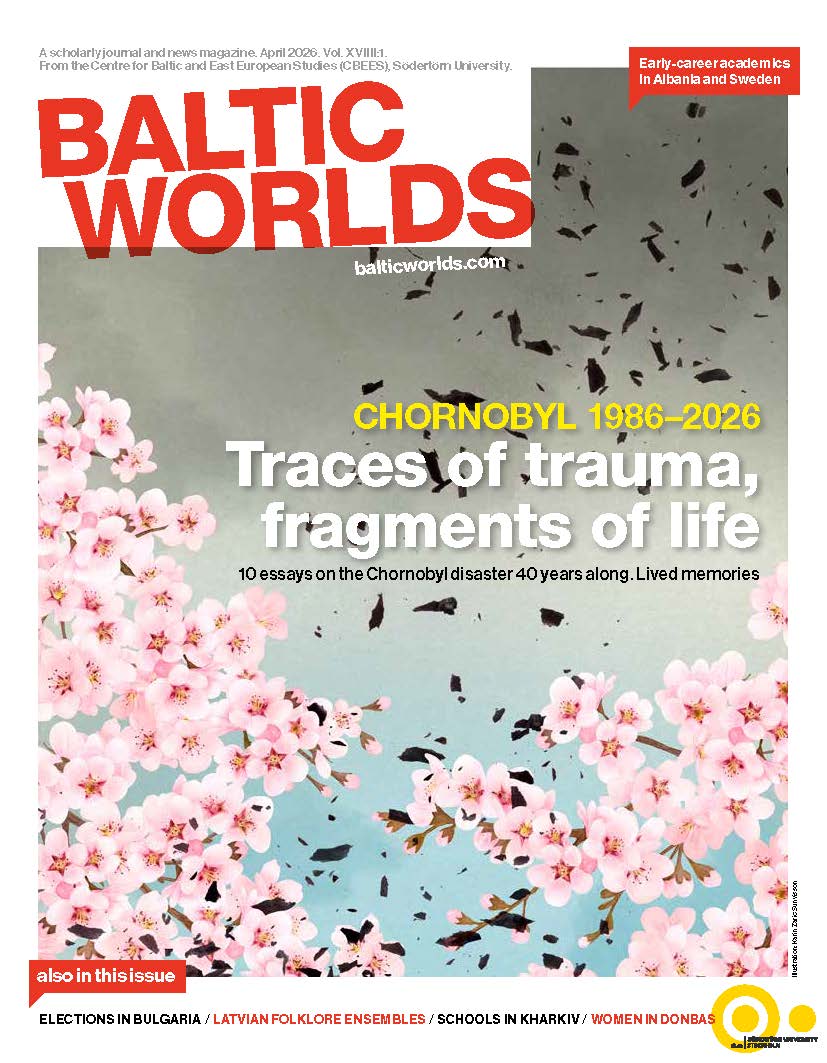 Issue 2026, 1:
 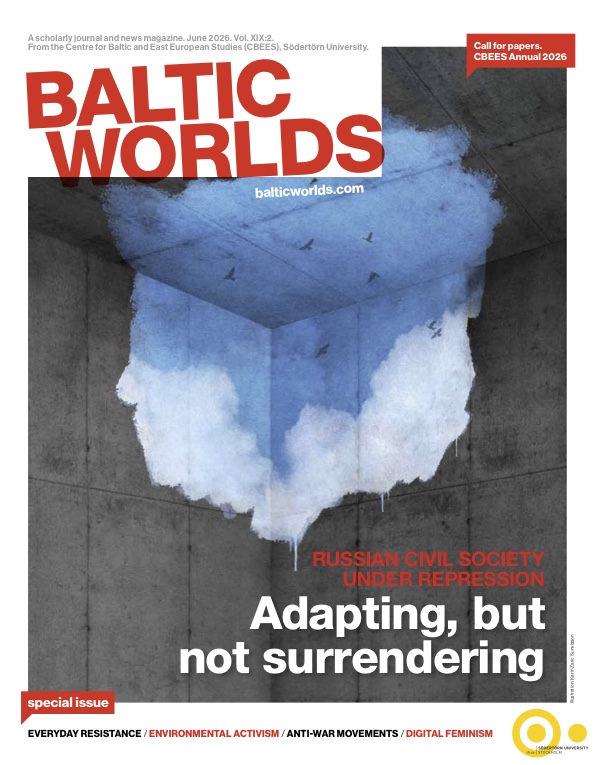 Issue 2026, 2:
  Baltic Worlds covers; the Baltic Sea Region, Eastern Europe, Russia, CentralAsia, Caucasus and the Balkan area.