A new treatment plant in St. Petersburg could eventually be built, despite initial resistance. It is the outcome of a successful joint project, funded by the Nordic Council and the EU. St. Petersburg's water consumption has also decreased significantly. A challenge remains for St. Petersburg; getting neighboring cities to clean their drains. Not many mil away waste flows directly into the Baltic Sea.
By
Ann-Louise Martin
November 7, 2013
Hostile takeovers and company captures have been an everyday reality in the post-Soviet Russian economy. A new research agenda is needed to understand whether private property is worth anything in contemporary Russia.
By
Ilja Viktorov
October 29, 2013
The situation for human rights in Russia is worsening. Some now even compare the country with Belarus. Opponents of the Putin regime met on a conference ”Russia – a more repressive Kremlin” in Vilnius in the end of May 2013.
By
Påhl Ruin
June 3, 2013
+ Aleksei Semenenko The Texture of Culture: An Introduction to Yuri Lotman’s Semiotic Theory, New York: Palgrave Macmillan, 177 pages
By
Herta Schmid
May 17, 2013
With a career spanning more than 20 years, Robert Chandler is one of the best known and most prolific translators of Russian into English. He has translated classic authors such as Pushkin and Leskov, as well as more contemporary writers like Grossman, and his translations of Platonov have won prizes. He recently completed a translation of Velimir Khlebnikov’s poem about the Volga famine.
By
Henriette Cederlöf
May 17, 2013
"Hunger" shows us Khlebnikov at his most compassionate; it may well be the only adequate literary response to the Volga famine of 1921.
By
Robert Chandler
May 17, 2013
For the celebrations of the First of May, 1917, all the buildings on the Palace Square, including the Winter Palace, were decorated for the first time with white drapes with red edgings and revolutionary slogans. Under the Bolsheviks, avant-garde artists assumed the right to develop art for the newly formed communist state, and the commission to decorate Petrograd for May Day 1918, was awarded to futurists.
Essay by
Natalia Murray
May 14, 2013
There is a great deal that we do not yet know about Vasily Grossman’s life. The widely held belief that Grossman lived out his last years in poverty and isolation is probably mistaken.
Essay by
Yury Bit-Yunan
May 10, 2013
Here it is suggested that the greatest crisis of social consensus that the Pussy Riot action produced, and the deepest collective anxiety that surfaced in the discussion, was the fear of the active and politically conscious woman, a woman who does not hesitate to use violence in claiming her subjectivity from the authority of the church, the family, the establishment, or the state. Concerning one principal issue, the public opinion was especially dramatically polarized, and that is what the three authors want to look closer at, namely, Pussy Riot’s feminist agenda.
Essay by
Yulia Gradskova Irina Sandomirskaja Nadezda Petrusenko
February 20, 2013
In the first post-revolutionary years the Bolshevik government saw Tatar and Bashkir women as important allies. Muslim women from the Volga-Ural region were to be educated and taught about their rights, and this educational campaign was seen as contributing to the development of the new socialist society. Women’s ignorance was seen by the Soviet authorities as an obstacle to progress which had to be overcome with the help of the new institutions like Commissions for the Improvement of the Work and Everyday Life of Women.
By
Yulia Gradskova
January 8, 2013

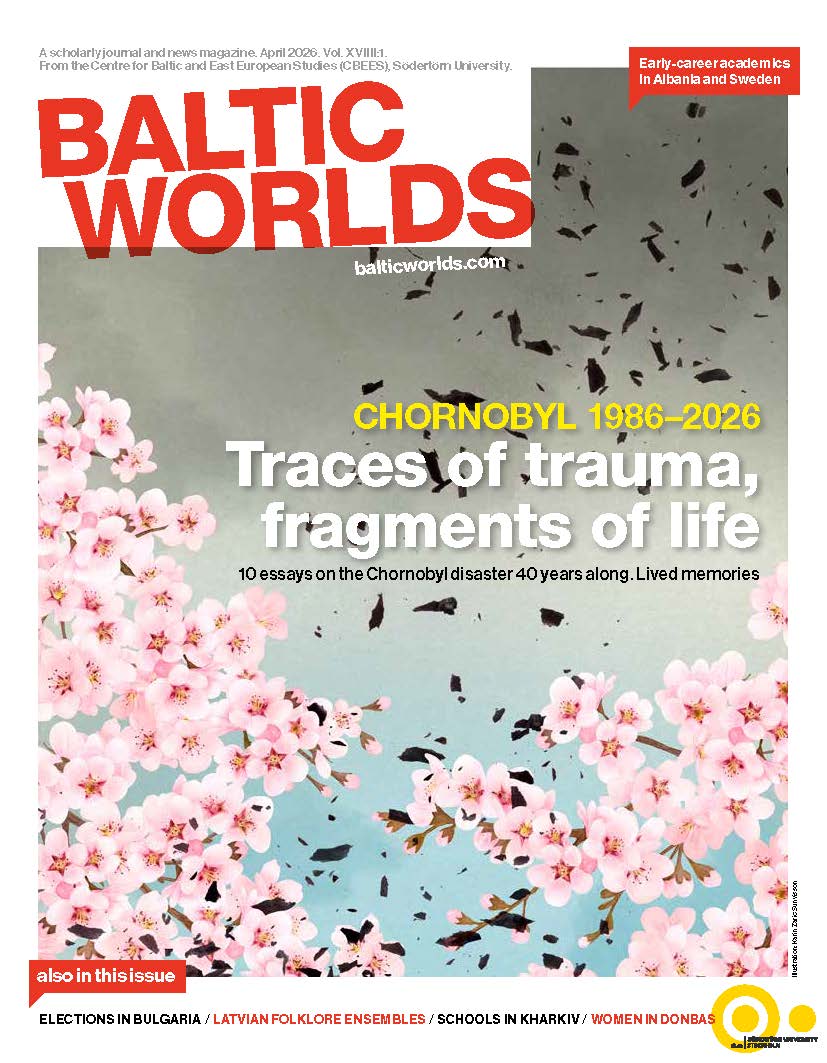 Issue 2026, 1:
 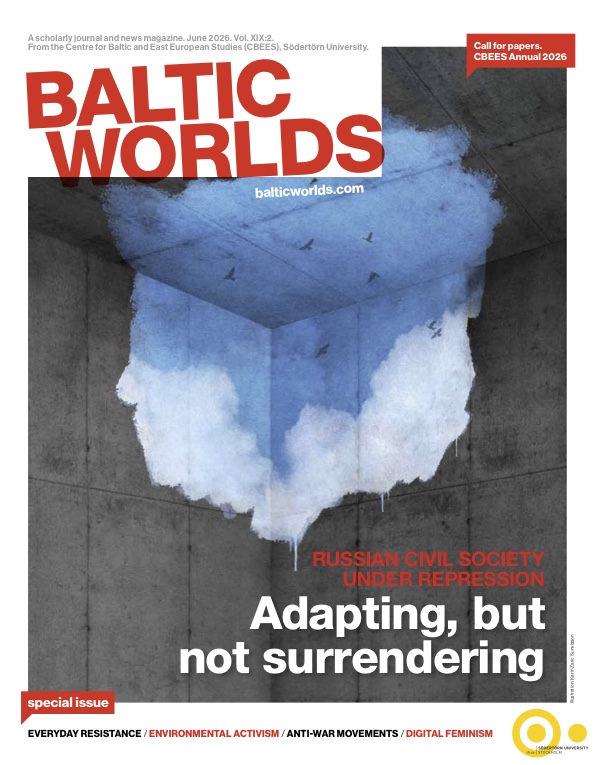 Issue 2026, 2:
  Baltic Worlds covers; the Baltic Sea Region, Eastern Europe, Russia, CentralAsia, Caucasus and the Balkan area.